Certification Pathways for Random Number Generators in British Progressive Jackpot Systems
Written by Casey Otto · Aug 25, 2026
Certification Pathways for Random Number Generators in British Progressive Jackpot Systems
Operators managing progressive jackpot offerings across the United Kingdom must navigate a layered set of certification requirements that focus on the integrity of random number generators, and these standards draw from both national expectations and international benchmarks that have evolved through collaborative industry efforts.
Core Technical Requirements for RNG Validation
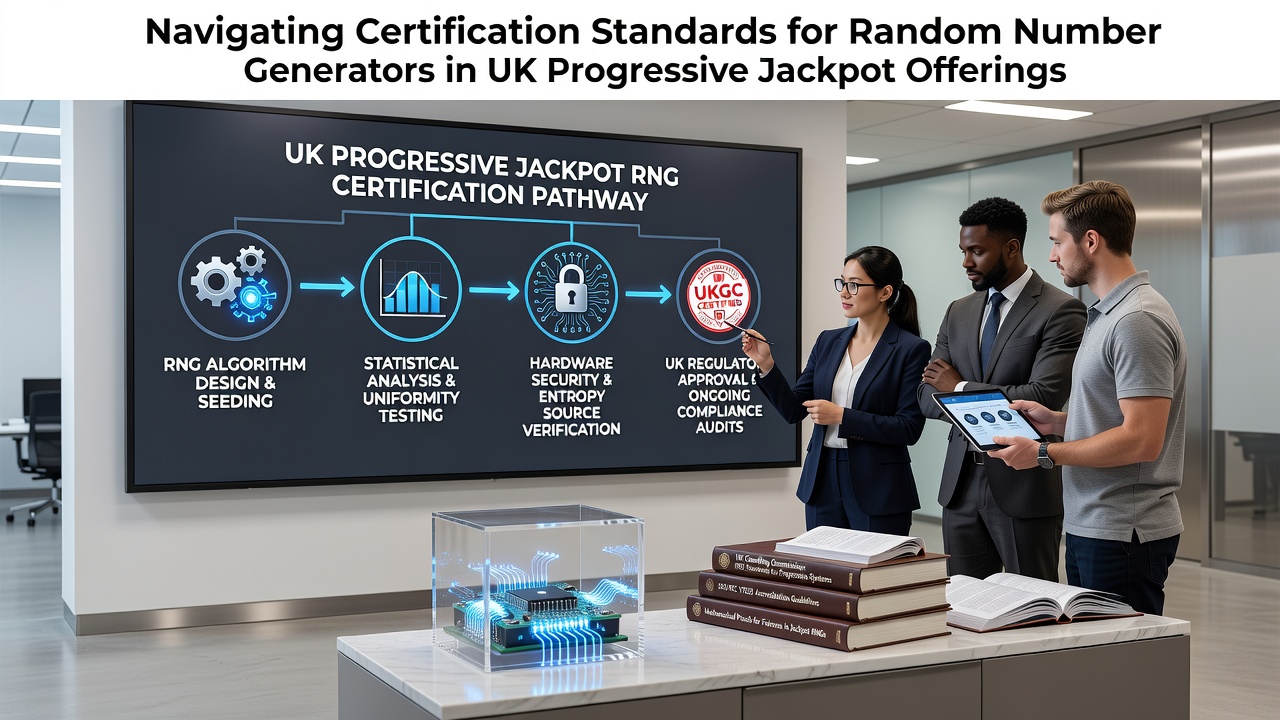
Random number generators form the foundation of fairness in any progressive jackpot structure because they determine prize allocation sequences, and testing bodies examine entropy sources, algorithm implementations, and output distribution patterns to confirm statistical randomness before deployment. Laboratories apply suites such as the NIST Statistical Test Suite along with Dieharder batteries, and certification occurs only after an RNG passes continuous sampling runs that exceed several million iterations while maintaining uniform probability across all outcomes.
Progressive systems add complexity since jackpot values accumulate across linked terminals or platforms, which means the RNG must also handle seed initialization, reseeding intervals, and state preservation during network interruptions without introducing predictability. Observers note that any deviation in these areas triggers immediate re-evaluation cycles.
International Benchmarks Informing UK Practices
Standards developed by the National Institute of Standards and Technology provide widely referenced test methodologies that UK-based testing houses adapt for local use, while European bodies such as those affiliated with the European Committee for Standardization contribute additional guidelines on hardware security modules that protect RNG states. Data from collaborative reports indicate that operators who align with both NIST and ISO/IEC 19790 frameworks experience smoother approval timelines when submitting documentation for progressive jackpot configurations.

Documentation and Audit Procedures
Submission packages typically include source code reviews, hardware schematics, entropy analysis reports, and live operational logs that cover at least six months of simulated and real-world play, and auditors cross-reference these materials against predefined pass/fail criteria that leave little room for interpretation. When anomalies surface during post-certification monitoring, operators must supply root-cause analyses within defined windows, often measured in days rather than weeks.
August 2026 marks the point at which several testing laboratories plan to roll out updated evaluation protocols that incorporate quantum-resistant seeding methods, and early adopters have already begun internal pilot programs to prepare for the transition. Those programs demonstrate how existing RNG architectures can integrate new entropy sources without requiring full system replacements.
Case Examples from Operator Submissions
One multi-site operator completed RNG recertification for a linked progressive network by providing parallel test results from two independent laboratories, which reduced the overall review period by several weeks compared with single-source submissions. Another case involved a smaller venue group that discovered a minor bias in an older hardware module during routine retesting, leading to a swift hardware swap and subsequent approval within the same quarter.
These examples illustrate how proactive monitoring and dual-lab verification streamline the process while maintaining compliance integrity across different scales of operation.
Conclusion
Certification for random number generators in UK progressive jackpot offerings rests on rigorous, repeatable testing combined with transparent documentation that aligns international standards with local expectations, and ongoing developments such as those scheduled for August 2026 continue to refine these pathways without altering their fundamental emphasis on statistical soundness and operational resilience.